Tuesday, September 13, 2011

Tuesday Trivia


  1. This little book was the first and most famous of a series of five that included The Chimes (1844), The Cricket on the Hearth (1845), The Battle of Life (1846), and The Haunted Man (1848).
  2. What book was the best-seller of the year in America in 1794?
  3. Which author entered the University of Montpellier to study for a doctorate in medicine, but was expelled because he had previously been an apothecary?
  4. Who was the inspiration for the popular sixteenth-century nursery rhyme Little Miss Muffet?
  5. Which author stood trial in Mexico in 1951 for shooting his wife?

Last Week's Answers


What famous opening line of one of America’s most famous poems was actually intended to parody the clichéd opening of a fairy tale?

“Once upon a midnight dreary …” Edgar Allan Poe’s The Raven


Which nineteenth-century British novelist’s pet was quite possibly the inspiration for the eponymous fowl in a nineteenth-century American poet’s most famous work?


Charles Dickens’s pet raven, Grip, may have been the inspiration for Poe’s The Raven.


Which British Poet Laureate is credited with coining the term “autobiography” in an 1809 article for the _Quarterly Review_?


Robert Southey


To whom did Charles Dickens offer to reveal the ending of his (unfinished final) novel, _The Mystery of Edwin Drood_? (Hint: she said “No, thank you,” and Dickens died, so no one knows how the novel was supposed to end!)


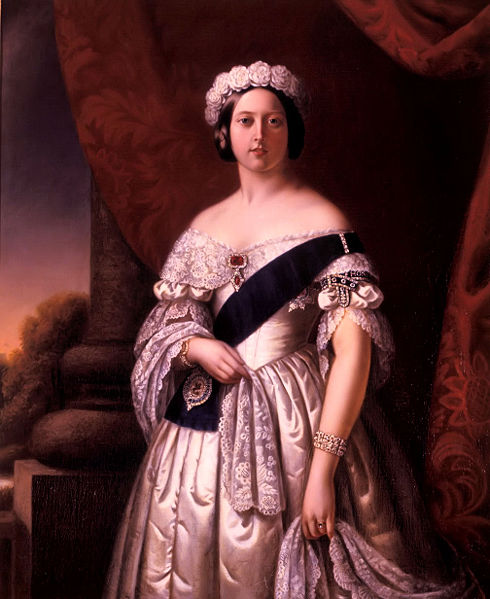
Queen Victoria.


Monday, September 12, 2011

What are Teacher Reviewers Saying About Vocabulary Power Plus for the ACT?

Recently, we received feedback on our new Vocabulary Power Plus for the ACT series from teachers on the Prestwick House National Curriculum Advisory Board. Read quotations from teachers below


The words are defined, organized, used in context with multiple practices, and even gives the opportunity to practice new roots and prefixes. I also find the practice English sentences to be incredibly useful.

All students, whether taking the ACT or not, need to improve vocabulary skills. They also need to be able to read for errors. Learning root words and prefixes is an easy and organized way of improving vocabulary skills as well. This product does meet a demand!

Leticia C. Geldart


There is an increased emphasis on vocabulary in state and national standards. This guide will not only prepare students for the ACT, but will also increase their comprehension in all disciplines.

Sara Zeek


Perhaps one of the hardest things to help students with is giving them a depth of vocabulary that will aid them not only on the ACT but also in college. This is a helpful approach with extremely accessible exericses.

Janice Mullan


A well-educated student must have an extensive vocabulary that is often not well-developed without formal vocabulary study. The ability to read and comprehend what is read is important both to success in the classroom and success in life.The variety of exercises included ensure that students do not simply memorize a word for a test and then forget it. They get a sense of when and how to use the word which makes it more likely that they will remember and use newly acquired vocabulary.


I am impressed with the variety of exercises for each lesson and the use of review lessons to aid retention. These review lessons introduce additional exercises such as crosswords. While primarily designed for the ACT, the vocabulary and exercises reflect the vocabulary and skills required to be successful on other standardized tests.

Cynthia Byers


The materials covered in the book will not only improve the student's vocabulary, but also in Revising and Editing. This will undoubtedly serve them well when writing essays/preparing for higher level courses.

Luis Garza


Good organization; well-aligned with what the ACT expects students to know and be able to do (writing and critical reading especially, as there are fewer materials available that focus on these along with vocabulary instruction); periodic reviews after each set of seven chapters; rubrics for evaluating writing; state standards listed (an excellent item to include!)

Sharon King-Hanley


The format is easy for students to access and use. I like the presentation - word, definition, part of speech, use in a sentence, synonyms, antonyms, words in context. All material students need to know when learning a new word. I like the periodic review of words with sentence completions and a puzzle. Different formats for learning.


Cherylin J Roeser


Thursday, September 8, 2011

How to “Do” Rigor Part I: How many teachers does it take to screw in a light bulb (or introduce a literary concept)?

by Douglas Grudzina


A few weeks ago, Prestwick House had the privilege of hosting an “externship” in cooperation with the Delaware Business and Industry Education Alliance. On the final day, one of the points our teacher-extern made was that, for the past two decades, everyone has been clamoring about (re)introducing “rigor” to the curriculum and to routine teaching and testing practices. Both an experienced Advanced Placement and a relatively new International Baccalaureate teacher, our intern observed that many teachers simply do not know how to “do rigor.” The models of rigorous instruction are few and far between, and often what is labeled “rigorous” is actually the same, old stuff repackaged with a DVD instead of a filmstrip.


At Prestwick House, we like to think that many of our materials do indeed model rigorous instruction and assessment, and we do support initiatives like the National Governors Association and Council of Chief State School Officers’ Common Core State Standards Initiative, which is all about rigor. So…to honor our former extern’s request to help her colleagues know “how to do rigor,” here is the first of a three-part series.


Part I: How many teachers does it take to screw in a light bulb (or introduce a literary concept)?


Admit it. How many times have you had a kid ask you, “When am I ever going to use this stuff?” Tell the truth. You know the question comes up just about every time you get into grammatical, rhetorical, linguistic, or literary terminology. You introduce the term, provide a definition and several superb examples, and the wise guy with the sideways baseball cap in the back of the room shouts out, _When am I ever going to use this stuff?_


Sadly, in far, far, far too many English language arts classrooms, the true answer is, “Never…because it’s going to be introduced to you every year from now until you graduate from high school.”


It’s no longer a new and controversial idea that children (and adults, for that matter) learn new words, not from word-of-the-day calendars or weekly vocabulary lists, but by listening and reading and then speaking and writing. We hear a new word. We guess at its meaning from the context. We might ask for clarification, and we might actually consult a dictionary (or similar source). But the vast, vast, vast majority of the time, we first encounter the word in use.


And … if we never ever hear the word again, or see it in print, or use it in our own speaking and writing, we will probably never “learn” it. It will not be a word we readily understand if and when we do encounter it.


But words we do use a lot—even “hard” words—we remember.


So, depending on what grade(s) you teach, how many times are we going to give our kids the same list of requisite terms brimming with definitions and examples? How many years in a row can we ask a kid to look at the same goofy poster that defines a literary term and offers a caricatured illustration of something? As if he’d never heard the word before!


If, once it’s introduced, all we do with a term like antithesis or metaphor or synecdoche—or, more importantly, if all we do with the concept—is point out that such-and-such a paragraph contains one, then we’re essentially telling the kid who asks _When am I ever going to use this?_ that he isn’t.


Consider the following question. (It’s a made-up question and does not refer to anything in this post, so don’t really try to answer it; you’ll only get frustrated.)


The third paragraph uses all of the following literary devices EXCEPT

A. metaphor.

B. simile.

C. onomatopoeia.

D. alliteration.

E. hyperbole.


On the surface, this seems like a perfectly legitimate question—questions like it often appear on large-scale assessments like AP, SAT, ACT, GRE, etc., etc. (actually, these specific terms are pretty basic for AP) … But there are actually very few and very narrow windows of instruction during which questions like this are valid.


The first is during large-scale assessment, the kind of test that the kid is (theoretically) going to take only once and that’s designed to assess the quality of his entire k – 12 education. Kids who get questions like this wrong are saying something very important about what they learned (or _didn’t_ learn) in school.


The second is within a week or two of the teacher’s introducing the newest of the five terms to the students. That’s a matter of curriculum. If your curriculum assigns these terms to, say, seventh grade, then this is a valid seventh-grade question. But if your curriculum assigns these terms to fifth and sixth grades, then the seventh- (or eighth- or ninth- or tenth-) grade teacher has no business asking such a question … _ever_. (Well, not with those terms.)


What the seventh- and eighth- and ninth- (etc., etc.) teacher _can and should_ do is _actually use_ the terms in regular classroom discourse.


_Don’t you think the onomatopoeia in Poe’s “The Bells” absolutely makes the poem?_


_How does the consonance in the first sentence of “The Fall of the House of Usher” contribute to the tone and mood of the story’s opening?_


_Compare Poe’s frequent use of the trochaic foot with Dr. Seuss’s use of the anapest. How is the poet’s choice of metric pattern appropriate (or inappropriate) for the subject matter of the poem?_


Yes … I am assuming the kid knows what a trochaic foot and an anapest are. I am assuming she’s been introduced to onomatopoeia and consonance. But even if my curriculum has reserved the introduction of those terms and concepts for the specific grade I teach, once I’ve introduced the terms, if I really want my kids talking and writing intelligently about language and literature, _I’ll find ways to make my kids use the terms_!


By the way, the Common Core State Standards developed by the National Governors Association and the Council of Chief State School Officers have this: “Describe how words and phrases (e.g., regular beats, alliteration, rhymes, repeated lines) supply rhythm and meaning in a story, poem, or song” as a Reading/Literature standard for grade -_Two_.


Which question is more fun to discuss:


_What is the metrical patter of Poe’s “Annabel Lee”?_
(irregular anapestic tetrameter/trimeter)


or


_Why is the metrical pattern of Poe’s “Annabel Lee” ironic?_
(because the anapestic foot suggests a lighthearted, musical effect, and the poem is about a necrophiliac)


So … one way to “do rigor” in your English class is to break out of the rut of constant introduction, definition, and identification. Even if the kid doesn’t (or pretends not to) know a term that was supposed to have been introduced earlier in the curriculum (like second grade!), you don’t need to reteach it. Most of the evidence suggests he’ll pick up the term just fine by hearing it, seeing it, and being … uh … _encouraged_ to use it in normal discourse.


Even if it is _your job_ to introduce your kid to the term, after you’ve introduced it, _use it_. Are you _really_ going to admit that your kids aren’t ever going to use these terms? (Well, they might come up on an SAT question …)


Another, related, way to “do rigor” is to keep clear for yourself the difference between the term and the concept. This post has been about introducing and using _terminology_ in your classroom. Kids develop an understanding of the _concepts_ much, much earlier—often even before they begin school.


Onomatopoeia might be a new word (and very challenging to spell) to a fifth-grader. But toddlers understand the idea of _clap, clap, tick, tock, bang, crash,_ and _sizzle_.


Synecdoche and metonymy sound like a million-dollar words, but even little kids enjoy the non-literalness of lending a hand, holding one’s tongue, and having busy fingers. (Well, some research—Panther, Klaus-Uwe and Günter Radden. _ Metonymy in Language and Thought_. Philadelphia: John Benjamins North America, 1999.—suggests that kids don’t really develop a strong sense of metonymy until four or five years of age—but that’s still way before high school when we typically “introduce” it.


When you introduce these terms, you are not opening new worlds of ideas for the kid, you are merely giving him a name for something he already knows. If you teach it like that, he’s much more likely to remember (and use) the terms, and you’ll be much less likely to keep the kid at the level of identifying things that he’s been playing around with since before kindergarten.


So “rigor” isn’t really all that hard to achieve. It doesn’t require a huge overhaul of your curriculum or a mass dumping of all of your previous lesson plans. It does, however, require a slight shift in paradigm, an admission that you are not solely responsible for every bit of knowledge the kid will ever acquire, and a suspicion that your kids really do know more than they’re letting on.


So, it’s really like that old self-fulfilling prophesy (actually, it _is_ the old, self-fulfilling prophesy): our kids will be as dumb as we let them or as smart as we require them.


Why let them off too easy?


--

Want to read more? Check out Part II and Part III of this article.

Tuesday, September 6, 2011

Tuesday Trivia


  1. What famous opening line of one of America’s most famous poems was actually intended to parody the clichéd opening of a fairy tale?
  2. Which nineteenth-century British novelist’s pet was quite possibly the inspiration for the eponymous fowl in a nineteenth-century American poet’s most famous work?
  3. Which British Poet Laureate is credited with coining the term “autobiography” in an 1809 article for the _Quarterly Review_?
  4. To whom did Charles Dickens offer to reveal the ending of his (unfinished final) novel, _The Mystery of Edwin Drood_? (Hint: she said “No, thank you,” and Dickens died, so no one knows how the novel was supposed to end!)


Last Week's Answers

Nineteenth-century Shakespearian actor Edmund Keen collapsed onstage while performing the eponymous role in this Shakespearean tragedy. He died three months later, some say of having expended so much in his performance. (Hint: He collapsed during Act III, scene iii.)


Othello


Nineteenth-century British actress Ellen Ternan may or may not have had an affair with this famous Victorian novelist, though he most certainly separated from his wife for her and provided her with a £1,000 bequest and a trust fund sufficient to guarantee that she would never have to work again.

Charles Dickens


While most of this writer’s obituaries dismissed him as a writer of pornography who had “wasted his considerable talents,” colleague E. M. Forster praised him as “the greatest imaginative novelist of our generation.”


D. H. Lawrence


In which Thomas Hardy novel does an adolescent murder his siblings and then commit suicide, leaving a note that says, “Done because we are too menny”?


Jude the Obscure


Friday, September 2, 2011

Prestwick House Develops New ACT Prep Program Based on Best-Selling Vocabulary Power Plus for the New SAT Series


September 1, 2011, Smyrna, DE — This week, Prestwick House will introduce its first vocabulary series tailored to the needs of ACT students, Vocabulary Power Plus for the ACT.


Based on the same techniques used in Prestwick House’s best-selling Vocabulary Power Plus for the New SAT vocabulary series with over 700,000 copies sold since 2004, Vocabulary Power Plus for the ACT is now available for students in grades 9-12.


“This series is based on both NCTE/IRA scientific research and the ACT itself,” says author, Daniel Reed. “Because of this, teachers will be able to give their students quality ACT test prep while simultaneously adhering to best practices in teaching vocabulary.”


“With the number of vocabulary words students are expected to learn, and the limited amount of time available to teachers in the classroom, it makes sense to create a program that can maximize both student ACT scores and word retention.”


While the ACT exam has been taken by students across all fifty states since 1960, ACT.org reports that the number of students taking the test has grown significantly in the past ten years. In 2010, 27 states reported over 50% of the student population as test-takers.


“With the increased number of students preparing for the ACT test and a lack of ACT-specific vocabulary products on the market, we wanted to make sure that teachers had what they need to help their students excel,” says Prestwick House Brand Manager, Jerry Clark.


“Vocabulary Power Plus for the ACT covers not only vocabulary, but also reading, writing, and grammar in a logically structured format. While skills learned through Vocabulary Power Plus for the ACT are universally useful, the series is specifically tailored for use as preparation for the ACT — something that we think teachers of ACT test-takers will find extremely useful.”


In addition to teaching vocabulary, this series provide students with practice on ACT-style questions and provides effective writing strategies that will prepare them for the ACT writing component.


“We provide ACT-style questions so that exam takers will be familiar with the structure of the language portion of the ACT on the morning they take it. The series helps test takers develop the cautious aggression necessary to succeed on any assessment test, whether ACT or SAT,” explains Reed.
“The ACT writing test is about getting your idea on paper in a short amount of time—not editing or proofreading or rewriting, because there’s very little time (30 minutes) for revision. Developing a rapid writing strategy for use with any topic is essential.”

Along with student workbooks, a teacher’s edition, and multiple versions of test packages, the Vocabulary Power Plus for the New ACT series contains helpful Introduction Presentations and Practice Presentations. Introduction Presentations familiarize students with words at the beginning of each unit and help them grasp shades of meaning by using words in an authentic context. Practice Presentations ensure that students have a firm understanding of new words provides the practice they need to retain them.


Currently, Prestwick House is looking for school partners to test the effectiveness of Vocabulary Power Plus for the ACT on students’ ACT scores. If you are interested in partnering with Prestwick House to try out this new program in exchange for free vocabulary materials, please contact Keith Bergstrom at keith@prestwickhouse.com or (302)-659-2070 x131.


To learn more about Vocabulary Power Plus for the ACT, call (800)-932-4593 or visit www.PrestwickHouse.com.


Wednesday, August 31, 2011

I Me Mine: The Beatles and Their Pronouns


According to Bill Zimmer of the New York Times:


James W. Pennebaker’s new book “The Secret Life of Pronouns,” which I reviewed in The Times Book Review on Sunday, makes it hard to stop thinking about pronouns and the other little “function words” that Mr. Pennebaker, a social psychologist at the University of Texas at Austin, sees as “the keys to the soul.” Mr. Pennebaker is admirably omnivorous when it comes to looking for material that will show how these stealthy words — which include articles, prepositions, conjunctions and auxiliary verbs — reflect our social psyche. One of his more unexpected sources is the lyrical canon of the Beatles.


Mr. Pennebaker crunches the numbers on Beatles songs using text analysis programs and arrives at some fascinating conclusions. As the band aged their lyrics grew “more complex, more psychologically distant and far less positive.” The increasing complexity of the lyrics is manifested in “bigger words and more prepositions, articles and conjunctions.” There was also a big drop in the use of first-person singular pronouns, from 14 percent in the group’s early years to 7 percent in the final years. Self-absorption, it seems, gave way to more socially involved perspectives.


As it happens, I’d been thinking about the Beatles and their pronouns because my 5-year-old son is currently working through a serious obsession with all things Fab Four. That includes repeated viewings of not just their films but also the “Anthology” DVD series about the group. At one point in the documentary Paul McCartney recalls collaborating with John Lennon on the song “She Loves You” in the summer of 1963. “All our early songs,” Mr. McCartney said, “had always had this very personal thing,” pointing to “Please Please Me,” “From Me to You,” “P.S. I Love You,” and “Thank You Girl.” Then he said, “we hit on the idea of doing a kind of a reported conversation: ‘I saw her yesterday, she told me what to say, she said she loves you.’ It just gave us another little dimension really.”


Mr. McCartney was clearly attuned to how pronouns could provide different perspectives in songwriting (even if he goofed when he told the biographer Barry Miles that “She Loves You” was a “personal preposition song”). But Lennon was no slouch in the pronoun department. He could take a third-person song like “Nowhere Man” and use pronouns to forge a sense of identification: “Isn’t he a lot like you and me?”


Lennon’s play with pronouns reached absurd heights, of course, in the first line of “I Am the Walrus”: “I am he as you are he as you are me and we are all together.” And let’s not forget about George Harrison. Even if the Beatles’ use of I-words declined over the years, Harrison penned the ultimate ode to first-person singular pronouns as badges of egocentrism in “I Me Mine,” the last song the Beatles recorded together.


Mr. Pennebaker also explores the songwriting partnership of Lennon and McCartney, comparing the songs they wrote mostly on their own to their true collaborations written “eyeball to eyeball,” as Lennon once put it. The songs on which they collaborated closely produced linguistic patterns strikingly different from those of either songwriter individually. The 15 songs that were true John-Paul partnerships, Mr. Pennebaker says, were “much more positive” in emotional tone and used “more I-words, fewer we-words and much shorter words than either artist normally used on his own.”


Mr. Pennebaker discerns that same synergy at work in a very different collection of texts: The Federalist Papers, three of which were written jointly by Alexander Hamilton and James Madison. John and Paul and Alexander and James: now that would be a supergroup.


(For more, see Pennebaker’s 2008 article in the journal Psychology of Aesthetics, Creativity, and the Arts, “Things We Said Today: A Linguistic Analysis of the Beatles,” authored with Keith J. Petrie and Borge Sivertsen.)


Tuesday, August 30, 2011

Tuesday Trivia

  1. Nineteenth-century Shakespearian actor Edmund Keen collapsed onstage while performing the eponymous role in this Shakespearean tragedy. He died three months later, some say of having expended so much in his performance. (Hint: He collapsed during Act III, scene iii.)
  2. Nineteenth-century British actress Ellen Ternan may or may not have had an affair with this famous Victorian novelist, though he most certainly separated from his wife for her and provided her with a £1,000 bequest and a trust fund sufficient to guarantee that she would never have to work again.
  3. While most of this writer’s obituaries dismissed him as a writer of pornography who had “wasted his considerable talents,” colleague E. M. Forster praised him as “the greatest imaginative novelist of our generation.”
  4. In which Thomas Hardy novel does an adolescent murder his siblings and then commit suicide, leaving a note that says, “Done because we are too menny”?


Last Week's Answers


Which is the longest running play in history?


"The Mouse Trap," by Agatha Christie.


How many weeks was Barbara Bush's book about her English Springer Spaniel, Millie's book, on the bestseller list?


29 weeks


Which literary character was born on September 22 1290?


Bilbo Baggins


What was Cinderella’s glass slipper originially made out of?


Cinderella's slippers were originally made out of fur, but the story was changed in the 1600s by a translator.


Who introduced mystery fiction's first fictional detective?


Edgar Allan Poe introduced Auguste C. Dupin, in his 1841 story, "The Murders in the Rue Morgue."


Which was the first American novel to sell more than one million copies?


Harriet Beecher Stowe's "Uncle Tom's Cabin"


Monday, August 29, 2011

Woot! New additions to dictionary reflect today's culture


According to CNN.com:


Don't be a denialist. Instead put on your jeggings (breathe in) or mankini (be careful) and retweet this article.


After all, it's hip to be in the know on the 400 new words and phrases in the 12th edition of Concise Oxford English Dictionary, the abridged version of the Oxford English Dictionary. The smaller dictionary is meant to "cover the language of its own time."


Beware: Not all words are built to last, wrote dictionary editor Angus Stevenson in a blog posting last week.


"Sadly, the new edition has no room for tremendous words like brabble 'paltry noisy quarrel' and growlery 'place to growl in, private room, den' -- what we might call a man cave these days," Stevenson wrote on a blog.


Some of the new words:


  • cyberbullying: n. the use of electronic communication to bully a person, typically by sending messages of an intimidating or threatening nature.
  • denialist: n. a person who refuses to admit the truth of a concept or proposition that is supported by the majority of scientific or historical evidence.
  • jeggings: pl. n. tight-fitting stretch trousers for women, styled to resemble a pair of denim jeans.
  • mankini: n. (pl. mankinis) a brief one-piece bathing garment for men, with a T-back.
  • retweet: v. (on the social networking service Twitter) repost or forward (a message posted by another user). n. a reposted or forwarded message on Twitter.
  • sexting: n. informal the sending of sexually explicit photographs or messages via mobile phone.
  • woot: exclam. informal (especially in electronic communication) used to express elation, enthusiasm, or triumph.

The dictionary also adds new definitions of familiar words.


Thought a cougar was just an ornery old cat you might encounter in the American West? By now you know a cougar also is "an older woman seeking a sexual relationship with a younger man."


Thursday, August 25, 2011

Literature Brings the Physical Past to Life

According to Scott Herring at Chronicle.com:


Recently, literary theorists have been making another of their occasional efforts to restore a trace of earthly reality to criticism. This time those efforts have taken the form of Darwinian literary studies, which attempt to relate the universal impulse to tell stories to human nature, as shaped by evolution.


My guess is that those theorists are motivated partly by a desperate realization that, in the process of deconstructing the profession, we in the literature business have shot ourselves not in the foot, but in the head. At a time of contracting education budgets, the public is no longer willing to pay for courses titled "Bat[woman] and Cat[man]: Queering the Canonical Comix."


If nothing else, people may appreciate the application of scientific thinking to a field that has known little of it. Americans admire practicality, and our profession has become esoteric and politicized. Today's literary scholarship too often serves as a vehicle for politics, and even professors who care little for public opinion are eager to indoctrinate students in their views. We seem to have given up on the notion that literature itself can be useful. But in doing so, we are forgetting a crucial function of the books we study.


History gives us the facts, sort of, but from literary works we can learn what the past smelled like, sounded like, and felt like, the forgotten gritty details of a lost era. Literature brings us as close as we can come to reinhabiting the past. By reclaiming this use of literature in the classroom, perhaps we can move away from the political agitation that has been our bread and butter—or porridge and hardtack—for the last 30 years.


Besides literary Darwinism, I suggest another way that scholars can ground their studies in reality: Start with a piece of the physical world. I, for example, recently had a major breakthrough that arose from a bit of junk engine iron.


In the autumn of 2009, I was kicking around the high sagebrush desert just inside the northern edge of Yellowstone National Park, in Montana, looking over the remains of a ghost town. In the process, I found an old dump. From the condition of the glass and the type of rifle and revolver cartridges lying around, I could tell that it dated back well into the 20th century. In one corner, I found the remains of a day—in about 1945, it seemed—when someone had finally gotten around to cleaning out the garage. Scattered around were a clutch pedal, a differential gear, an axle, a piece of tire, and so forth. The parts must have been old even in the mid-1940s, and should have gone for scrap during the war. Perhaps they had still been in use, driven to death by the car's owner.


One piece was evocative somehow: an engine head, the long, heavy piece of steel that sits on top of the cylinders on the engine block and contains the explosions of volatilized gasoline that drive the pistons up and down. I know a little about cars because before I went to graduate school, I spent some years running a service station and repair shop in Yellowstone, where I'd gotten hooked on the scenery. I took photographs of the engine head. It seemed familiar somehow.


Two days later, I was called home to California. My grandfather, who had just turned 85, was sick. When I visited him at home in the Sierra foothills, he was bedridden but otherwise still himself. We talked about my trip to Yellowstone, and I opened up my laptop to show him the photographs. When I got to the engine head, I asked if he knew what it was.


He squinted at the screen. "That's a head from a 1934 Ford Model B."


OK—more specific an answer than I'd expected. Then he surprised me again: "That's a head from the same kind of car I had during the war. That'd fit any model from a '32 to a '34. Mine was a '34."


I knew the car from family photos. Maybe that is why the head, lying out there in the desert, sparked my memory; it went with much of the other junk, which had come from a Model B. (That model wound up becoming famous. By the 1950s, the cars could be bought for a pittance, and kids began customizing them beyond recognition. They became the little deuce coupe the Beach Boys sang about in 1963—the "deuce" being the "2" in the year the car made its debut: 1932.)


Seeing that piece of the past turned loose a flood of memories in my grandfather. "I left Camp Carson in Colorado Springs—I got transferred to another unit, in Los Angeles," he continued in his Ozark accent. He was speaking, I think, of early 1945, when he drove his Model B with my grandmother and my mother, then a baby, across Tijeras Pass on Route 66. ("Tiger-Ass Pass," my grandfather would forever call it.) It was snowing. One would think the snow would keep the engine cool, but a head gasket blew, and the water supply of the engine spewed out onto the hissing block.


My grandfather hitchhiked and walked into Albuquerque, where he found a junkyard. "The owner had three sons in the service," he explained. "He saw my uniform. He let me have some tools, and I went out and got what I needed. When I tried to pay him, he said, 'You don't owe me anything.'"


The snow continued. He now had to get back to the car on Tijeras Pass, where my grandmother and the baby were stuck. He found a cabdriver who finally agreed to take him back to the Ford, he repaired the engine, and the family limped on toward California.


Then he told me something I'd never heard before. Years before the breakdown on Route 66, his family had been part of the great Okie/Arkie flight to California. They had left Little Rock in 1939, driving a 1937 Oldsmobile, "pretty much a brand-new car, in those days. But the trip destroyed it by the time we made it to Santa Monica. It never ran right again. The heat killed it." They had crossed the Mojave Desert in the usual way, which was to pull up near the California border, wait until nightfall, and make a kamikaze run to the other side. Desert temperatures usually drop after dark, but the Mojave can stay hot even at night.


"Why did the heat do that much damage?" I asked.


"Cars were different then," he explained. "On that Model B, the radiator was never big enough, and the water pumps were never big enough. The head cracked when they got hot. Mine got hot." The Oldsmobile had suffered similarly. As engines heated, every moving part—camshaft, crankshaft, rods, bearings, rings, and all the rest—was stressed and finally warped in ways that spoiled the fine tolerances any engine requires.


At the time, as he spoke, it seemed a minor point. We talked until he was too tired to go on. The disease—leukemia—had done more damage than I thought. He passed away the next day.


While I grieved for my grandfather, my mind kept returning to the way I had touched history that afternoon. I thought, for instance, about the great migration to California that Americans undertook every day during my grandfather's youth. I thought about the most famous document of that migration, John Steinbeck's The Grapes of Wrath.


Steinbeck, we know, had a habit of exaggerating. He made the flight from Oklahoma sound like it involved tens of millions, when in fact the numbers were closer to tens of thousands. Still, scenes in the book came back to me with a vividness they had never possessed before—especially the Mojave Desert, between the town of Needles and the Sierra Nevada, which the Joads had to cross to reach California's Central Valley:


"The truck took the road and moved up the long hill, through the broken, rotten rock. The engine boiled very soon and Tom slowed down and took it easy. Up the long slope, winding and twisting through dead country, burned white and gray, and no hint of life in it. Once Tom stopped for a few moments to let the engine cool, and then he traveled on. They topped the pass while the sun was still up, and looked down on the desert—black cinder mountains in the distance, and the yellow sun reflected on the gray desert. The little starved bushes, sage and grease-wood, threw bold shadows on the sand and bits of rock. The glaring sun was straight ahead. Tom held his hand before his eyes to see at all. They passed the crest and coasted down to cool the engine. They coasted down the long sweep to the floor of the desert, and the fan turned over to cool the water in the radiator."


Generations of high-school and college students have been told that these descriptions are (pause to write on the whiteboard) a literary allusion. The Joads are wandering through the desert of Sinai in search of the promised land. They are like the Israelites in the Book of Exodus, which is in another, bigger book called the Bible.


That analysis is good enough, as far as it goes. But it leaves out an important element: engine coolant.


Drivers during the Great Depression had coolant and antifreeze, but it was primitive stuff compared to the brews available today. Modern coolant, the green fluid that mixes with water in radiators, is part of the armory of sophisticated engineering that has eliminated heat as a threat to automotive engines. Today millions make the drive between Los Angeles and Las Vegas in 120-degree heat with the air conditioner on high, driving way over the speed limit and never giving the heat a thought unless they have to get out and buy gas.


On that last afternoon with my grandfather, he took me to an alternate reality—alternate, but not made up. It was a reality of hardship, suffering, and endurance that we seem to have lost. When his family reached the far edge of the desert in the '37 Olds, my grandfather was so desperately hot that he tried swimming in the Salton Sea. The result made me think of another literary allusion, to Lot's wife. "I come outta there white with salt, head to toe," my grandfather said. "I never suffered like that." He kept suffering until he reached a bathtub in Santa Monica, days later.


That kind of information is in The Grapes of Wrath, but we have a hard time recognizing it. When we read about the Joads' crossing, we assume that the problem is simply that their car is old and overloaded. The truth is that the sum of society's technology was not up to the challenge of moving a family across one of the world's most fearsome deserts.


The past is not another country; it is another life. The texture of daily living is different now than in the past, more different the further back we look, until we find people whose experiences created a psychology we might find baffling or rude. Many details that once made up the daily round are lost to us because people considered them too trivial to write down.


Knowing the past means knowing what people carried in their pockets, what they did with their sewage, where their dogs slept. Those details may seem unimportant, but what they convey is not. My bit of junk from the Montana sage taught me why millions of otherwise-modern people in 20th-century America feared the desert as much as the ox-drawn pioneers had.


Let the dead French theorists lie. Instead, literary scholars can become guides to the physical reality of the past. If you think about it, that's what we've been doing in class for the last hundred years: explaining how to pronounce "Doth not Brutus bootless kneel?" in Early Modern English, for instance, or describing a Boeing B-17 to help students understand Randall Jarrell's poem "The Death of the Ball Turret Gunner." Once ordinary people note that we're doing something useful again, they might stop looking at us like we're nuts. And maybe we'll even get some jobs back.


Tuesday, August 16, 2011

Prestwick House Helps Its Employees Find Balance


This week, Prestwick House was featured in the Wilmington News Journal's feature on the Best Places to work in Delaware. Check out the full story written by Dan Shortridge here, or read more below.


Prestwick House CEO Jason Scott stands in the Smyrna warehouse where there are over 200,000 books ready to ship to schools throughout the United States.


A visitor walking into the offices of Prestwick House might be forgiven for thinking they've entered through the wrong door.


Instead of a reception desk, etched-glass logo or waiting area with magazines, you're greeted by what appears to be the interior of a comfortable coffeehouse, with wooden tables and tall chairs ready for people to lounge, lunch, brainstorm or banter.


Even the "work" areas are different. Cubicles are colored maroon instead of an antiseptic gray or green, and posters and fully loaded bookshelves abound.


The relaxed, comfortable atmosphere is all intentional, said CEO Jason Scott, as are the flexible work schedules and self-managed projects. .


"Sometimes people aren't sure what kind of business this is," Scott says with a chuckle.


Prestwick House, which employs about 30 workers at its Smyrna-area offices, publishes books, resource materials and teachers' guides in English and the language arts, targeted at 7th- to 12th-grade classes. Its team of writers, editors, artists, designers, marketers and distributors produces about 130 new products a year, in both printed and digital formats.


One of the best things about working for the company, employees say, is the flexible work system that's in place. Some employees can work -- within reason -- whatever hours they want. If a writer wants to start the day at 7 a.m., or an editor at 10 a.m., that's fine.


Even those who have specific tasks to do during specific hours praise the work-life balance the company allows them.


That moved Prestwick House into the top ranking this year for the workplace providing the best work/life flexibility in the News Journal's annual Top Workplaces survey, conducted with Workplace Dynamics.


Mandee Watts, 23, of Smyrna, has worked at Prestwick for eight years, starting as a temporary teenage warehouse worker for the summer shipping rush. If she needs to take off early to be with her daughter, she says, it's fine.


"As long as your job's done, it's no problem at all," Watts said. "It's the best place in the world."


Some employees on the creative side have the flexibility to work from home two days a week, if they're disciplined, Scott said.


"Our writers and editors have found that to be a very productive time for them," he said.


Employees also are responsible for setting their own annual and monthly goals, and many of the company's project ideas come from within -- at times from the bottom at one of the many meetings held in the main entrance area, with tables pushed together and everyone having a voice.


"If you propose a project, there's a good chance you're going to be heading it up," said general manager Keith Bergstrom, who worked his way up after being hired out of the University of Delaware in 2001 for a customer service job.


Other benefits include:


» A common "time off" pool, instead of divisions between sick time and vacation time. "If you need to take off, you can take off," Scott explains. "You don't have to call in" -- pretending to cough -- " 'I'm sick.' "


» A company-paid graduate education program, which has helped three employees so far earn their MBAs.


» A Christmas break when the entire company is closed down for a long holiday period, mirroring the shutdowns of most of the schools they serve.


The company still feels like the family-owned business it is, though it has grown substantially from its early days in the Scott family garage on Prestwick Court in Dover.


These days, the family includes all 30 employees, whose faces adorn goofy "class photos" in the main area, mimicking the Sgt. Pepper album cover one year, or dressed up as pirates to mark an edition of "Treasure Island" being put out.


"There are a lot of good people here," he said. "We have a good time together."